American Artist
Phyllis Wiener
Phyllis Wiener (1921-2013) -- Iowa, Minnesota
Known for: abstraction, landscape and figure painting
She created, worked and exhibited under the following last names during her lifetime: Downs (1939-1961) Ames (1962-1968) and Wiener (1971-present).
Phyllis Wiener is one of the first women artists to embrace the abstract art movement in Minnesota. Wiener took a night class with Grant Wood at University of Iowa in Iowa City, Iowa, 1940; and also has studied with Russell Green at Stephens College at Columbia, Missouri, 1944-1945; Cameron Booth at University of Minnesota in Minneapolis, 1950-1953 & 1960-1962; and the Instituto Allende, San Miguel de Allende, Guanajuato, Mexico, 1961.
Wiener's father had no artistic background, but encouraged her to draw because he enjoyed her pictures. Many of her schoolteachers encouraged her artwork. Reflecting on her art career the approval received kept her creating more art. She remembers always being in the company of artists, people who enjoy art, and maintained a lifestyle influenced by art and artist goals.
Wiener's work first started with landscape painting. Then she moved to figures like most child artist's drawing people. "It seems to me that there is something very primeval about the desire of the human being to make representations of other human beings, and to spend their time looking at statues, etc." Since a child's first visions are of their parents bending over them and smiling, this influences every young artist, if only on a subconscious level.
Her first group exhibition was in Boulder, CO with the Boulder Artist's Guild in 1941. By 1944 her art had reached all regions of the United States. Then from 1954-1959 the American Federations of Arts Traveling Exhibitions included her artwork. Under the U.S. State Department in 1962, her paintings were in a group exhibition that toured with the Art in Embassy Program, American Embassies of Europe providing international exposure. Her artwork was exhibited at the American Embassy in Papua, New Guinea by the U.S. State Department in 1997.
The Man in a White Suit (oil 1973) and Subway Riders (oil 1969) are her figure work with style stripped away exposing naturalism. These pictures show the influence of modern choreography with her figures moving against each other on the canvas. Landscapes became a series The Beautiful Florida Keys. This series shows bright light flattening land and water into optical shapes. This vision of Florida's light shows a universal landscape as expressed in the 1970s with Colors of the Coast (oil 1972) and In Two Months Now (oil 1973).
"I have no problem with being called a formalist. Abstract forms can be positively thrilling to me. Sometimes they are difficult to bring alive; that is the challenge of abstract art." -- Phyllis Wiener.
Wiener creative works are dynamic, bold, colorful, and full of expression. Six Times Blue (acrylic 1981), Hallelujah Rags (acrylic 1981), French Gifts (acrylic 1981), Double Red (acrylic 1981) and Double Blue (acrylic 1981) were inspired by daughter Amy, a clothing designer.
Her art career encompasses teaching art at the Walker Art Center; University of Minnesota at Minneapolis in the Extension Division; General College, Minnetonka Art Center at Minnetonka; Normandale Jr. College at Edina; and the College of St. Catherine at St. Paul.
After moving to Minnesota in 1950, she joined Artist's Equity, a national group with chapters in many cities. Artist's Equity was a national organization with annual conventions in New York City. This organization gave a voice to the artist and the profession. It provided the opportunity to artists to meet, collaborate and define themselves as business owners.
Wiener is a charter member in 1982 of Women's Art Registry of Minnesota (WARM), a vibrant and regional woman's art movement mobilized by women artists expressing themselves in many materials. WARM held itself to high creative and productive standards exhibiting regionally. The WARM publication produced in 1984 for "A Landmark Exhibition" captures the artist's biographies, photographs of their work and WARM's historic information.
The WARM gallery was established in 1976 based on the need for exhibition opportunities, defining the role for Minnesota women artists and celebrating women's cultural contributions. WARM produced many events other than exhibitions and published the WARM Journal, a quarterly edited by Phyllis Wiener for five years. The publication became nationally recognized in the women's movement. The journal's voice was respected nationally in the art community being devoted to the feminist movement in the arts.
Since the turn of the millennium, Wiener has exhibited in 7 group exhibitions and 8 solo exhibitions. From previous years many group shows are credited to her including: Walker Art Center, 6 exhibitions and 3 awards; Denver Art Museum, 3 exhibitions, one award; Minnesota State Fair, St Paul, 16 exhibitions and 7 Awards; US Embassy, Papua, New Guinea; Pennsylvania Academy of Fines Arts; U.S. State Department Traveling Exhibitions-European Embassies; Butler Art Institute, Youngstown, OH, and the American Federation of the Arts traveling exhibitions and many more too numerous to note here. She was nominated for a Ford Foundation Fellowship in 1958 and 1959. In 2006 she was nominated for a McKnight Foundation grant.
The artist's greatest influence was Cameron Booth. "Cameron Booth taught me about painting. I had many painting instructors, but Cam Booth knew, and taught me, Abstract Expressionist ideas. It was the way I came into painting." Quoted from A Retrospective Exhibition Phyllis Ames Wiener, 1981.
Wiener's art was created, and then signed with her different last names throughout her life, since American women assumed their husbands last name during this era. This occurrence is common with women artists and if not documented will cause confusion in their lifetime body of work. Her maiden name is Zager with no art created under this name. She created, worked and exhibited under the following last names during these years: Downs (1939-1961), Ames (1962-1968) and Wiener (1971-present).
Wiener's first home art studio was created by the necessity to care for and raise her four children. This home studio provided her with 3-4 hours throughout the day to paint. This blend of housewifery and painting created four children, four grandchildren, five great grandchildren and hundreds of paintings to her credit. She attributes continued success to the exchange with other artists and organizations allowing the flow of ideas, impressions and mutual support. She remains active in the Minnesota art community, and continues to express herself through her art with new production. Some artists retire reflecting on past work. Wiener never stops painting. She exhibits and sells her work providing a role model for today's artists.
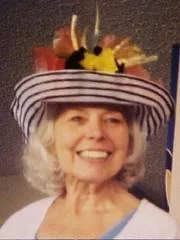
Family is important to the artist. Her four children today continue work in the arts. Gareth Downs, her son taught history at Bucks County Community College in Pennsylvania. He is a jazz musician and composer. Her daughters, Allison and Amy Downs work as designers of hats, coats and websites. Daughter, Barbara Hodne, teaches English Literature at the University of Minnesota. Wiener blended her love of family, a traditional woman's role and the untraditional role of American art with great success that continues today.
Wiener's art is held in private, public and corporate collections internationally. Wiener continues to draw in her sketchbooks everyday, creating ideas for paintings. She has over 39 national solo exhibitions to her credit in NY, IL, WI, IN and MN from 1951-2007.
Selected public and corporate collections of Wiener's work include: 3M Company, St. Paul, MN; American Association of University Women; Augsburg College, Minnesota (Padillo Collection); Bucks County Community College, Newtown, PA; Cathedral Church of St. Mark, Minneapolis, MN; Concordia College, St. Paul, MN; College of St. Catherine, St. Paul, MN; Federal Land Bank, St. Paul, MN; First National Bank, Lincoln, NE; First Bank Systems, Minneapolis, MN; Franciscan Hospitals, Rock Island, IL; Frederick R. Weisman Art Museum, University of Minnesota, Minneapolis, MN; Hennepin County Hospitals, Minneapolis, MN; Hutchinson Technology, Hutchinson, MN; IDS Properties, Minneapolis, MN; Lutheran Brotherhood, Minneapolis, MN; Macalester College, St. Paul, MN; Mayo Clinic, Scottsdale, AZ; Medtronic Corporation, Minneapolis, MN; Minneapolis Institute of Arts, MN; Minnesota Museum of American Art, St. Paul, MN; Minnesota State Historical Society, St. Paul, MN; Museum of Kuopio, Kuopio, Finland; Pillsbury World Headquarters, Minneapolis, MN; QWEST (previously Northwestern Bell Telephone Co) Omaha, NE; Walker Art Center, MN; Weisman Museum at University of Minnesota, MN; Wells Fargo Bank, Minneapolis, MN; and many others.
Paris art critic Doug Hanson compared her work to Henri Matisse for her "ease, lyricism and confidence of her approach -- not to mention her attraction to forms that resemble cut-outs."

Interested in this artist’s work?
Contact Us